analysis Asia
‘The situation is tense’: Why a rift is growing between Malaysia PM Anwar and deputy Zahid
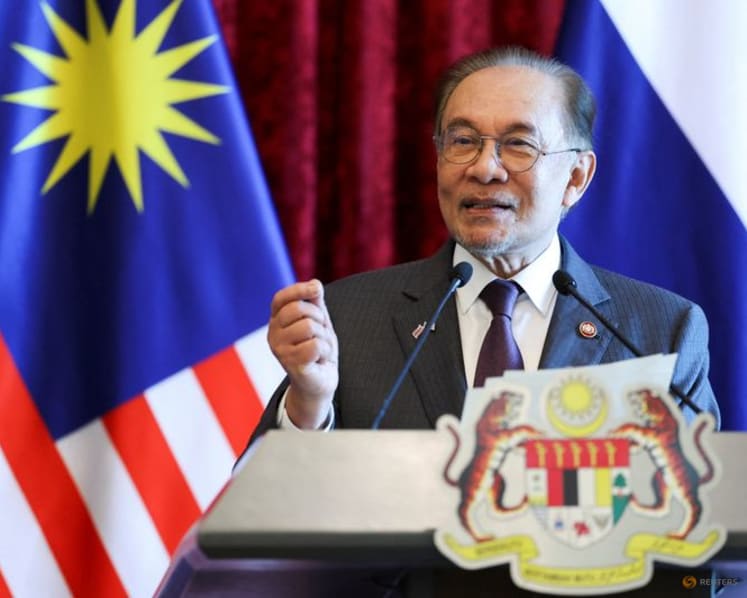
Amid public sparring between Malaysia Prime Minister Anwar Ibrahim and his deputy Ahmad Zahid Hamidi, analysts and politicians say the brinkmanship is largely about keeping UMNO’s options open ahead of the next general election.
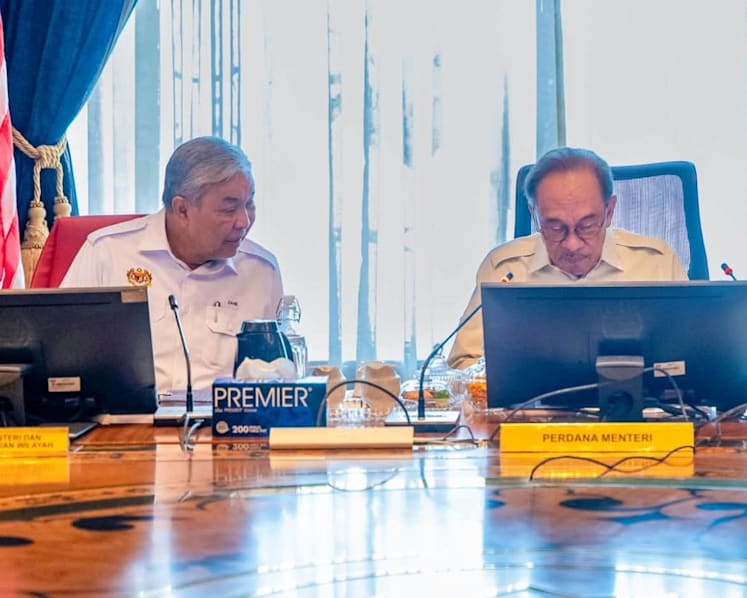
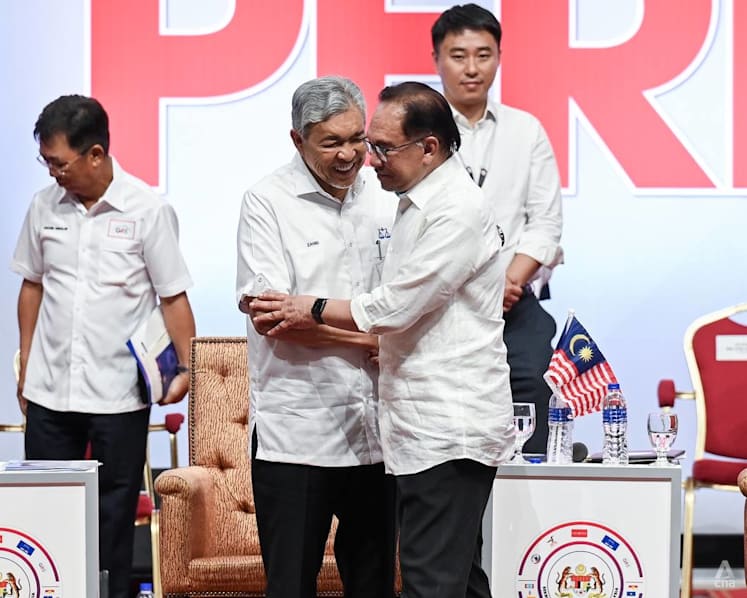
Prime Minister Anwar Ibrahim (right) and his deputy Ahmad Zahid Hamidi during a Cabinet meeting on Sep 9, 2026. (Photo: Facebook/Fadillah Yusof)

This audio is generated by an AI tool.


JOHOR BAHRU: Malaysia’s ruling coalition partners are engaged in an intensifying test of nerves, with Prime Minister Anwar Ibrahim and his deputy Ahmad Zahid Hamidi’s latest barbs fuelling speculation over whether their uneasy political partnership can hold until the next general election (GE).
While Anwar ultimately holds the cards on when to dissolve parliament and call a GE due by February 2028, analysts say Zahid’s United Malays National Organisation (UMNO) has several ways to ratchet up the pressure.
Anwar leads the Pakatan Harapan (PH) coalition while Zahid is president of UMNO, the lynchpin of the Barisan Nasional (BN) coalition that he chairs.
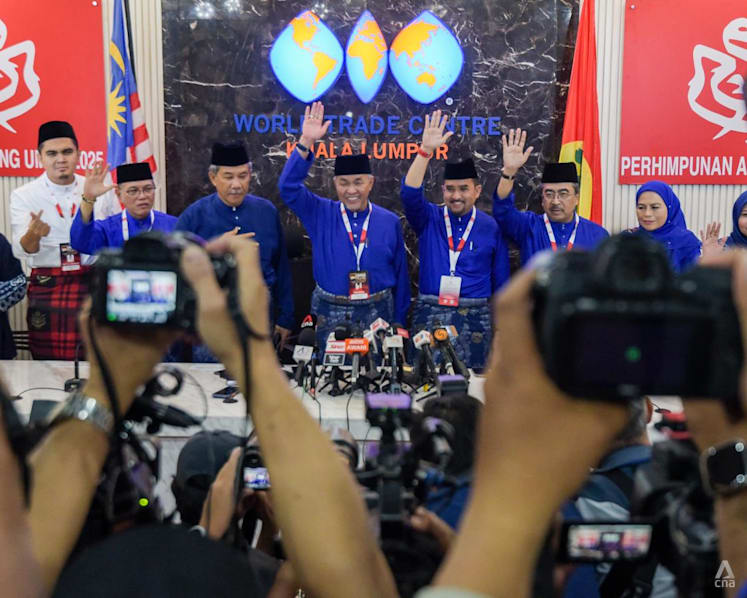
Tensions escalated at the UMNO General Assembly over the weekend.
In his closing speech on Saturday (Sep 12), Zahid presented Anwar with two choices.
“First, get a fresh mandate through a GE. Second, formally remove us (UMNO) from government and hold a confidence vote in parliament,” he said at the party headquarters as delegates repeatedly chanted “dissolve”.
“Do you dare? If you have the guts, do it quickly ... remember, the unity government was formed because of UMNO. The prime minister became prime minister because of UMNO’s support,” added Zahid.





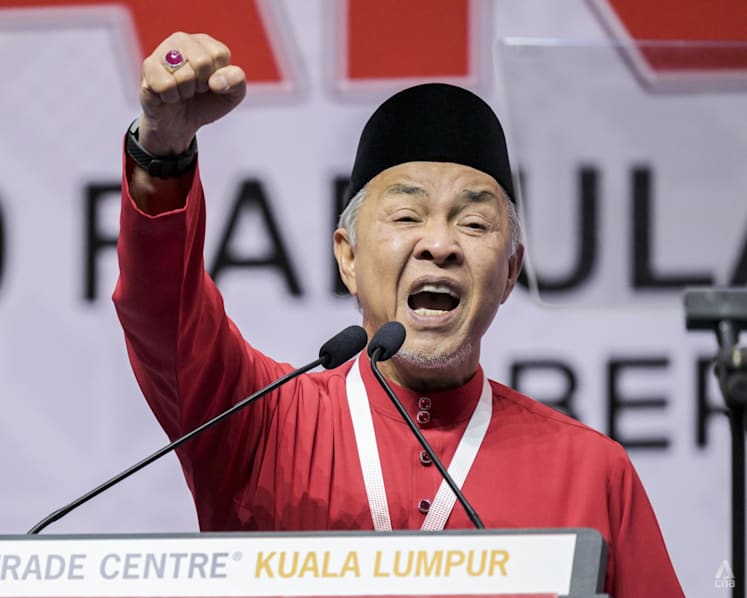
A day earlier, Zahid had taken veiled swipes at Anwar over changes to the RON95 petrol subsidy quota under the BUDI95 scheme.
“First it was reduced, and when elections were around the corner, it was increased out of fear,” he said.
“Who was responsible for this? Guru. Enough is enough. Listen to the people, dear guru,” said Zahid, who also called for a GE to be held immediately.
With BN’s resounding victories in the recent Johor and Negeri Sembilan state elections, as well as its collaboration with the opposition Perikatan Nasional (PN) coalition aimed at uniting the Malay vote, analysts have said the political winds are currently in BN’s favour.
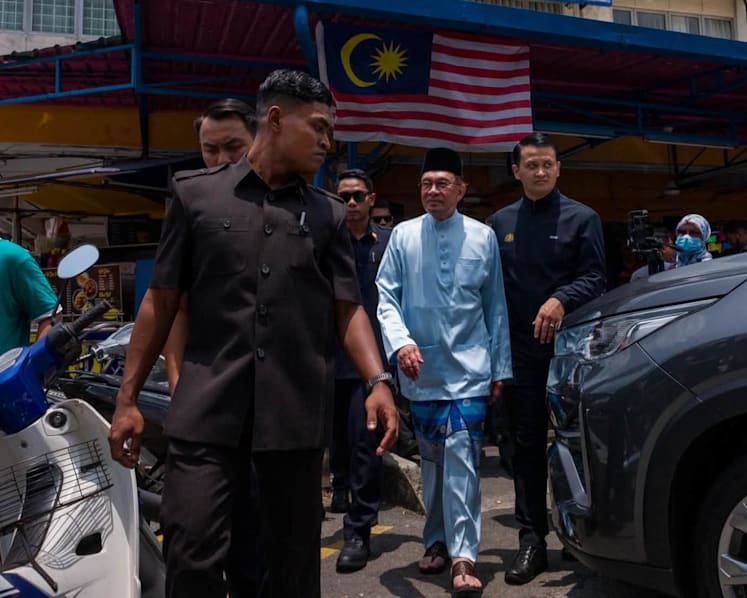
Anwar, who was on a working visit to India, appeared to hit back in a Facebook post, which showed his arrival in New Delhi and interactions with leaders.
“Pray that this diplomatic mission achieves its objectives. May the students learn from Guru how Madani Diplomacy is put into practice,” he wrote.

UMNO’S CARDS
The government currently draws support from 76 PH MPs, 30 BN MPs, 23 MPs from Gabungan Parti Sarawak (GPS), eight from Gabungan Rakyat Sabah (GRS) and seven other government-aligned lawmakers.
Another 75 MPs sit on the opposition bench, while three seats previously held by former PKR lawmakers Rafizi Ramli, Nik Nazmi Nik Ahmad and Wong Chen are vacant following their departures from the party.
This means that even if all 30 BN MPs withdraw their support, Anwar would be left with 114 MPs – a razor-thin majority in the 222-seat parliament – if the other government-aligned lawmakers continue to back him.
But BN will deprive the unity government of its two-thirds majority in parliament should they withdraw their support.
They could also make it harder for the government to pass key legislation, including the Budget in October. A commanding victory for the incumbents in the Melaka state election – expected before the end of the year – could further strengthen the party’s hand.
But analysts note that such a move would not necessarily bring down Anwar’s government. PH could still command a simple majority if it retains the backing of its East Malaysian partners including Gabungan Parti Sarawak (GPS) and Gabungan Rakyat Sabah (GRS).
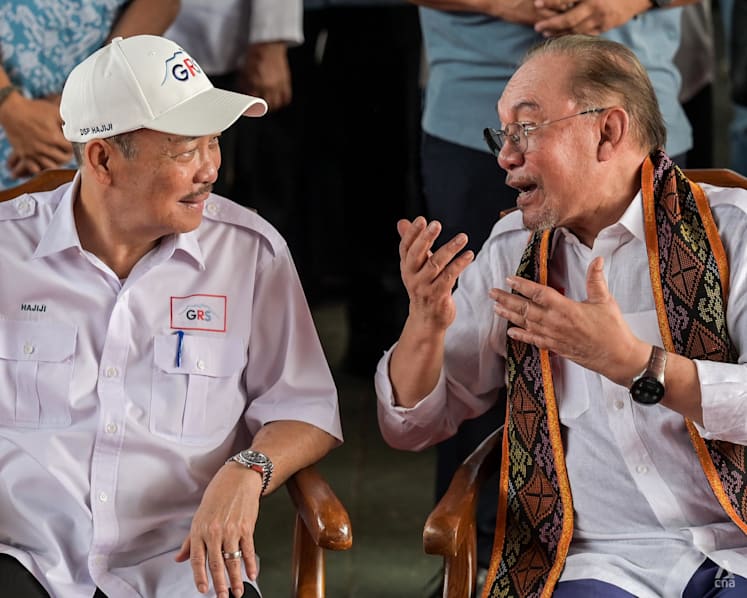
Against this backdrop, Anwar has in recent days sought to strengthen ties with the Borneo blocs, including by backing proposals to increase parliamentary representation for Sabah and Sarawak – a move analysts say could also help shore up support from GPS and GRS as tensions with UMNO rise.
Politicians within the government played down suggestions that the relationship between PH and BN is approaching breaking point.
Democratic Action Party (DAP) leader Sheikh Umar Bagharib Ali told CNA that Zahid’s remarks were likely aimed at presenting himself as a “champion” of UMNO to party members and the grassroots.
“The fact is that Cabinet decisions also involve Zahid in his capacity as deputy prime minister,” said Sheikh Umar, who is vice-chairman of DAP’s Johor chapter. DAP is a key component of PH.
“If he disagreed, he should have raised his objections in Cabinet, rather than suddenly attacking these policies at the UMNO General Assembly.”
Sheikh Umar also rejected the suggestion that the public sparring meant ties between PH and BN were irreparably damaged.
“At this point, any form of political cooperation is possible, because no single party is dominant,” he said, referring to Malaysia’s fluid political landscape, where no single coalition has been able to dominate and erstwhile rivals have been forced into alliances to secure power since 2018.
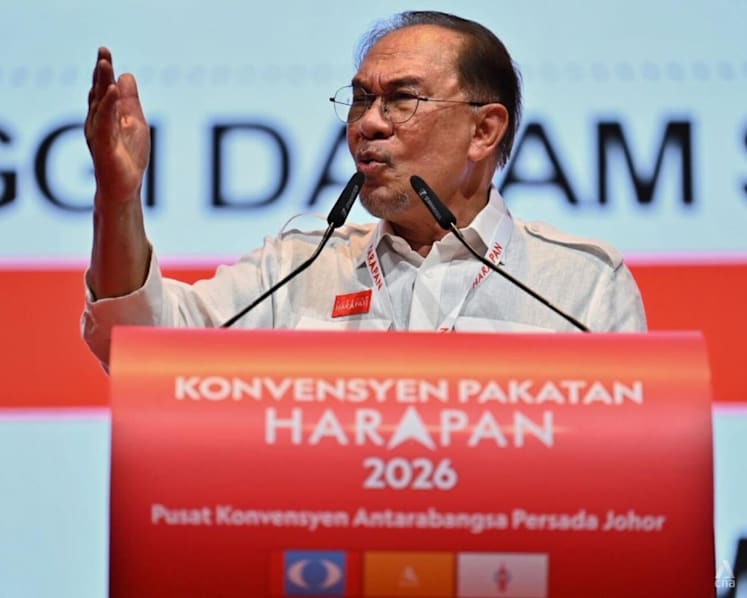
CAN UMNO PULL THE RUG OUT FROM UNDER ANWAR’S GOVERNMENT?
Whether UMNO can turn its recent electoral momentum into enough pressure to force Anwar’s hand at the federal level is another question, analysts said.
Ahmad Mohsein Azman, a senior analyst at strategic advisory firm BowerGroupAsia, said one potential pressure point is the upcoming Budget 2027 vote, should UMNO decide to join forces with PN in opposing it.
“The upcoming Budget 2027 tabling and vote will be the nearest signpost for any attempts by Zahid to push for an earlier general election,” he told CNA.
Malaysia’s federal Budget requires a simple majority to pass in parliament. An outright defeat on such a crucial supply vote would signal a serious crisis of confidence in the government.
But analysts stressed that UMNO and the wider BN bloc, with just 30 MPs, do not have the numbers on their own to defeat Anwar’s government.
Zahid also played a pivotal role in Anwar’s ascent to the premiership after the 2022 general election resulted in a hung parliament. PH emerged as the largest bloc with 82 seats but was 30 short of a simple majority – exactly the number held by Zahid-led BN, making the coalition a kingmaker in post-election negotiations.
Syaza Shukri, a political scientist at the International Islamic University Malaysia (IIUM), said Zahid’s challenge to Anwar is not an imminent threat to bring down the government.
“It’s really more political signalling because Zahid lacks the numbers to challenge Anwar to push UMNO out and (collapse the government or vote against the Budget). It doesn’t make sense (to pull UMNO out of government),” she said.
“It is more a signal to their (potential ally) Parti Islam Se-Malaysia (of PN) that they are committed to the idea of a Muslim coalition for the next election.”
Azmi Hassan, a senior fellow at the Nusantara Academy for Strategic Research, similarly believes Zahid is unlikely to instruct UMNO and BN lawmakers to vote against the Budget, particularly after pledging that the party would remain in the unity government until the end of its term.
Indeed, unlike his fiery rhetoric at the UMNO General Assembly, Zahid struck a more conciliatory tone when speaking to reporters.
Despite differences with PH, he said, UMNO would remain part of the unity government until the end of the term.
But that does not mean UMNO is without other means of increasing pressure on Anwar.
Azmi pointed to the upcoming Melaka state election as another potential turning point, particularly if BN extends its winning run at state elections.
“If BN romps to another resounding win in Melaka, Anwar will be cornered and it could further weaken his position in government,” he said.
A senior UMNO figure who spoke to CNA on condition of anonymity said that while Anwar and Zahid remain friends, political tensions between the two have grown in recent months.
“Zahid has to maintain a working relationship with Anwar because they are both needed to keep this government going. But … the situation is tense,” the leader said.
“Zahid has to sit beside Anwar for every Cabinet meeting, but at the same time, their party supporters and grassroots (are at odds).”
Ultimately, the UMNO leader said, Zahid’s strategy is less about immediately pulling his party out of government than ensuring it is not locked into any one political configuration ahead of the next GE.
Zahid’s objective, the leader said, is to preserve options for UMNO – leaving the party free to forge alliances with different partners depending on which arrangement offers it the greatest leverage after the polls.


WILL ANWAR’S BORNEO GAMBIT PAY OFF?
One way for Anwar to strengthen his grip on power and potentially bolster his chances of securing a second term, is to deepen his alliance with the dominant political blocs in East Malaysia, analysts said.
GRS and GPS are key political forces in Sabah and Sarawak, respectively, and their support has been crucial to Anwar’s unity government.
It is against this backdrop that Anwar announced last week that Sabah and Sarawak would receive a larger share of parliamentary representation, following an in-principle Cabinet decision to increase the number of seats allocated to the two Borneo states.
Anwar, however, did not specify how many additional seats would be created or how the change would be implemented.
When Malaysia was formed in 1963, Singapore, Sabah and Sarawak collectively held about one-third of parliamentary seats – an arrangement intended to prevent Malaya from unilaterally commanding the two-thirds majority needed to amend the Federal Constitution.
That balance changed after Singapore left the federation in 1965.
Today, Sabah holds 25 Dewan Rakyat seats and Sarawak holds 31, giving the two states a combined share of about 25 per cent.
Sabah and Sarawak have pushed for at least one-third, or 33 per cent, parliamentary representation, which would require about 18 additional seats under the current size of the legislature.
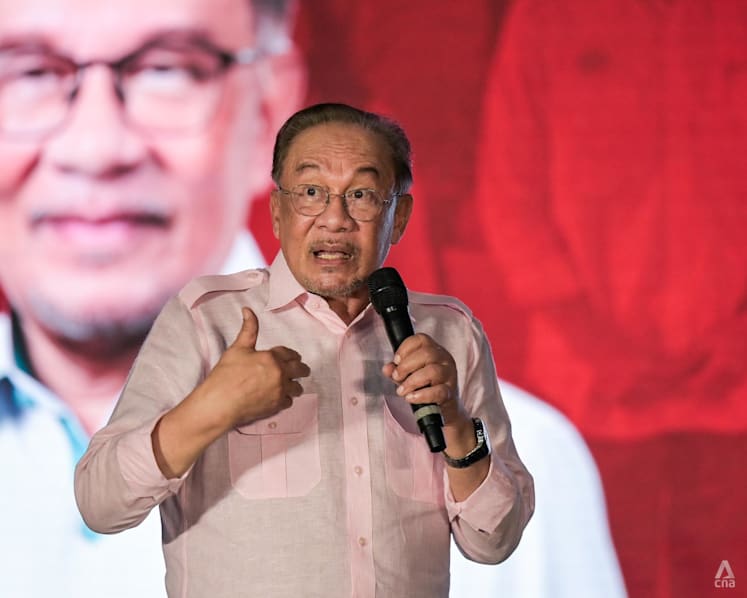
Syaza said delivering greater representation would be well received by GRS, GPS and other East Malaysian parties – and could pay off for Anwar.
“This move could be in Anwar’s favour because it strengthens the support (from Sabah and Sarawak in the current term) and for him to get a second term at the next polls,” she said.
But the chances of completing such a change before the next general election are “slim”, given the time and political consensus required, Syaza noted.
Increasing the number of MPs allocated to the East Malaysian states would also require an amendment to Article 46 of the Federal Constitution – and therefore the support of at least two-thirds of MPs in the Dewan Rakyat, Azmi said.
Without BN’s support, Anwar would struggle to muster those numbers.
“Anwar’s government is in a weak position … and I think that’s the reason why Zahid and UMNO remain confident and hold the upper hand,” Azmi said.
The Borneo parties will also have a broader calculation, analysts said.
Sabah and Sarawak have “always been the stabilising force in Malaysian politics and they are unlikely to want to rock the boat”, Syaza noted. “A PH+GPS+GRS coalition is not stable, especially without a (conservative) Malay party as an anchor.”
GPS and GRS will want to align themselves with a coalition that can garner a two-thirds majority as this would be “the main ingredient in passing MA63-related constitutional amendments both blocs are seeking to obtain”, said Ahmad Mohsein.
“With PH on the retreat following consecutive losses in three state elections, a BN-PN tie-up appears more likely to have the upper hand come GE16,” he said.
PH’s recent poor performances in state elections mean that Anwar is likely to delay calling a general election for as long as feasible, analysts said.
Ultimately, BN and Anwar’s interdependence may be the reason why the increasingly public sparring between Anwar and Zahid is unlikely, for now, to result in an outright rupture, Azmi suggested.
He expects their barbed exchanges to continue as both sides seek to maximise leverage without being the one to bring down the government.
Anwar himself said differing views within the government are “normal” and he is handling them with a “moderate” approach, reported Bernama news agency.
“I choose a somewhat moderate path because what is important is that the government must be stable, otherwise there will be many losses for our country,” he said on Monday when asked about issues raised at the UMNO General Assembly.
“We listen to everything, but to my knowledge, I don’t see any problems. There are small and normal ones. Even in a household, there are minor issues, let alone with political commanders,” he told Malaysian media before concluding his working visit to India.
Analysts agreed Malaysia’s fluid coalition politics means today's adversaries could just as easily find themselves partners again.
“After polling night, you never know. It may be the case (that they) will work together again to form the government,” Azmi said.