Commentary: Are we prepared for a widespread telco outage?
Singtel and DBS outages indicate that service providers should review the resilience of their systems, says cybersecurity expert Matthias Yeo.
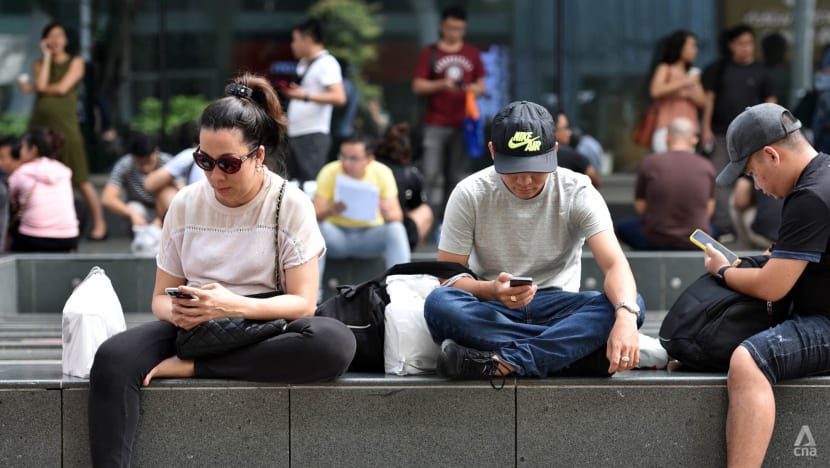
People using their mobile phones in Singapore. (File photo: CNA/Jeremy Long)

This audio is generated by an AI tool.


SINGAPORE: When Singtel mobile service disruptions hit between Mar 16 and Mar 18, many customers in Singapore were unable to make phone calls or e-payments.
Preliminary reports suggest 600,000 Singtel customers were affected by the Mar 16 outage, which lasted nine hours, while 2,000 customers faced mobile connectivity issues the next day. The Infocomm Media Development Authority will share its findings from its investigation and take regulatory action for any lapses.
Some Singtel users also experienced issues with broadband connectivity on Mar 23.
Because daily life depends so much on telecommunication infrastructure, outages are not only minor inconveniences – they can put people’s safety at risk. In September 2025, Australian telco Optus’ mobile broadband and fixed-line services went offline for about 13 hours. But the most troubling part is that some customers could not contact emergency services and the outage was linked to two deaths.





Such incidents raise questions about what workarounds there are in the event of a widespread outage, and if we are prepared for the worst-case scenario.

CYBERATTACK OR NOT?
When an outage hits, users may wonder whether it is a cyberattack.
At the most basic level, hackers can disable all services provided by a telco. Amid the war on Ukraine, Russian hackers targeted the country’s largest telco provider, Kyivstar, in December 2023. The attack led to millions of people and businesses losing mobile and internet signal, and affected the operation of cash machines. Air raid sirens did not function properly in some areas.
Attackers can also steal sensitive information once they gain access to a telco company. In April 2025, SK Telecom in South Korea was hacked, resulting in the theft of over 9 gigabytes of SIM-related data linked to approximately 25 million subscribers. This type of data leak can enable SIM cloning, allowing attackers to hijack phone numbers, intercept multifactor authentication codes and gain access to banking apps.
The risk of a cyberattack is real for Singapore. In February, Singapore raised the alarm about hacker group UNC3886, which targeted all four of the country’s major telecommunications networks.
Singtel was quick to clarify that the Mar 16 outage was not a “cyber-related" event. Because telcos and the government are accountable to the public in the event of a breach, users can expect transparency on the matter.
TECHNICAL FAILURES BEHIND OUTAGES
The period of Singtel outages coincided with a disruption to DBS digital banking services on Mar 19, raising questions about whether these incidents are related. Singtel stated that the Mar 16 incident was caused by a “mechanical fault” in a network facility, while the local bank's outage was caused by an “erroneous step” performed during a system change.
While there is no evidence at present that the Singtel and DBS outages were linked, it is not uncommon for service providers to face disruptions around the same time. Modern organisations, especially large ones, share common infrastructure, vendors and dependencies on some of their services. As Singapore is a small country, such convergence is the norm.
It may sound counterintuitive, but system updates and patches are one of the most common causes of outages.
When organisations like Singtel try to change or fix an issue, they do not just touch one system as there are hundreds of interconnected components. There could be an underlying problem that has not been fully fixed, such as a system update that went wrong, a setup error or a shared component that is still unstable.

PREPARING FOR FUTURE OUTAGES
When outages occur, service providers should go beyond investigating the root cause and review their recovery processes, failover mechanisms and system dependencies. The three consecutive days of Singtel mobile service disruptions, followed by broadband internet issues a week later, could indicate hidden dependencies between seemingly independent components.
Resilience strategies need to be revisited. Telco providers need to practise for failures through drills and simulations, and test how quickly they can recover.
Because fixing the backbone of the telecommunications network remains the responsibility of service providers, there is little Singaporeans can do. But there are small ways to be prepared, such as keeping some cash on hand so that you are not totally dependent on mobile payment.
We can watch out for each other. If mobile or broadband services are down, inform your neighbours and check in on each other in case someone needs urgent help.
Do not panic – trust that the service provider and authorities are doing everything they can to restore the service.
If the service provider reaches out, provide constructive feedback on issues that affected you so that they can build a more resilient system.
Matthias Yeo is Co-founder and CEO of cybersecurity firm CyberXCenter.
Editor’s note: This commentary has been amended to reflect that two deaths were directly linked to the outage after an independent review, instead of four deaths initially reported. We apologise for the error.