S$1.5b nickel fraud: Father-in-law of alleged mastermind jailed after using money he did not own to post bail
Chua Eng Kiam was given two months' jail after using sham loan arrangements to stand the S$1.5 million bail for his son-in-law, alleged fraudster Ng Yu Zhi.
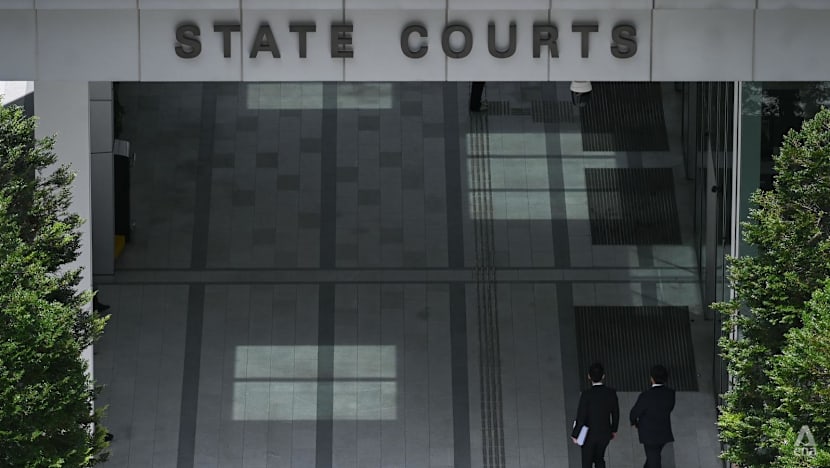
Lawyers walking to the State Courts on Mar 18, 2026. (File photo: CNA/Justin Tan)

This audio is generated by an AI tool.


SINGAPORE: A man who agreed to stand bail for his son-in-law, alleged fraudster Ng Yu Zhi, using funds he did not own was sentenced to two months’ jail on Thursday (Apr 16).
Chua Eng Kiam, 68, had allowed Ng to use him as a bailor for S$1.5 million (US$1.18 million) in bail, even though Ng and others provided the money.
Chua pleaded guilty to entering into an indemnity arrangement as a bailor with Ng, an offence under the Criminal Procedure Code.
Despite not having the means to furnish the bail sum, Chua agreed to step in after Ng asked him to replace another bailor in June 2023.
Ng is currently on trial in the High Court on more than 100 charges, including forgery, cheating and fraudulent trading.
He is the alleged mastermind behind a nickel investment fraud involving almost S$1.5 billion supposedly duped from 947 investors.
Much of the funds were said by the prosecution to have been channelled to his personal bank accounts and used to finance a lavish lifestyle.
Ng's case is still pending before the courts.
HOW CHUA CAME TO BE BAILOR
The State Courts first granted Ng bail of S$1.5 million on Mar 22, 2021, after he was charged. The amount was increased to S$4 million on Jul 5, 2021.
Apart from the usual bail conditions, an additional requirement was imposed for his bailor to declare the source of funds.
This followed findings that funds from one of his bailors had been provided by other individuals.
Ng’s bail amount was subsequently increased to S$6 million.
He was released on bail on Mar 1, 2023, after two individuals, including his father, stood as sureties.
The second surety was later replaced by Chua, who then had to provide S$1.5 million in bail.
Ng told Chua he would borrow the sum from friends. Chua understood that he would not have to contribute as Ng would be responsible for the amount.
"Therefore despite not having S$1.5 million in cash or assets, and knowing that he would not be able to furnish the bail amount as required, he agreed with Ng’s request to be a surety for the sum of S$1.5 million," the prosecution said.
To satisfy court requirements on the source of bail funds, Chua signed multiple loan agreements with individuals introduced by Ng. These involved sums of hundreds of thousands of dollars borrowed from several parties.
In reality, the arrangements were a facade. Chua understood that the documents were meant to show the court that he had legitimate sources of funds. He understood that he would not have to repay the “loans”, even though his name was listed as the borrower.
He eventually received about S$1.5 million, arranged by Ng, and opened two bank accounts to furnish the bail sum to the court.
On Jun 28, 2023, Chua applied to be Ng’s bailor and signed documents acknowledging that he was not to be indemnified in the event that the bail sum was forfeited, and that indemnity arrangements were an offence.
Despite this, he proceeded and handed the bogus loan agreements to a court officer. He also affirmed an affidavit stating that he was the "sole and legal owner" of the two bank accounts.
The court approved the application.
On Jan 29, 2024, Ng was arrested for suspected offences linked to the sale of a shophouse at 13 Bussorah Street.
He was later given three additional charges for offences allegedly committed while Chua was his bailor.
Ng’s bail was revoked on Feb 7, 2024, and the S$1.5 million in the two bank accounts was seized by authorities two days later.
The prosecution sought between nine and 11 weeks' jail.
Deputy Public Prosecutors Brian Tan and Matthew Choo said Chua "intentionally misled the district court that he was a fit and proper surety who had the means to stand as surety for the bail bond and was the legal owner of the bail sum".
He even provided false supporting documents in the form of loan agreements to further his deception.
"The agreements were intended to subvert the court’s screening process on the suitability of the surety and the sources of funds ...The accused’s act threatened and undermined the entire system of bail," said the prosecutors.
By having "no stakes in the game", Chua had no incentive to perform his duties as bailor, the prosecutors said.
They pointed out that bail balanced the interests of an individual's personal liberty against the public interest in securing an offender’s attendance at trial.
"A bailor who is indemnified has no incentive to carry out his duties as surety to ensure the offender’s compliance with the bail conditions," they said.
"Bail indemnity agreements therefore interfere with the proper administration of bail and are contrary to public policy and corrosive to the bail system."
For his offence, Chua could have been fined, jailed for up to three years, or both.